
The Member States forming the European Federation possess such autonomy (in the fields of constitutionality, legislation, and jurisdiction) that they can be called states, although they do not possess the competences of a state in international affairs. The European Union (European Federation) is one of the best examples of such a definition. The European Federation was born through the convergence of many previously sovereign states. European federalism is therefore an example of federalism through integration, and the name „European Union” has become merely symbolic. The European Union, in the literal sense of the word, was not a federal state under international law, but rather a confederation of states, i.e., a loose formula that often precedes the institution of a federal state, where independent states are bound by a treaty that can only be amended by the unanimous and common consent of all signatories. The European Federation (and therefore the European Union), according to this project, is a state possessing a Constitution that regulates relations between the constituent entities.
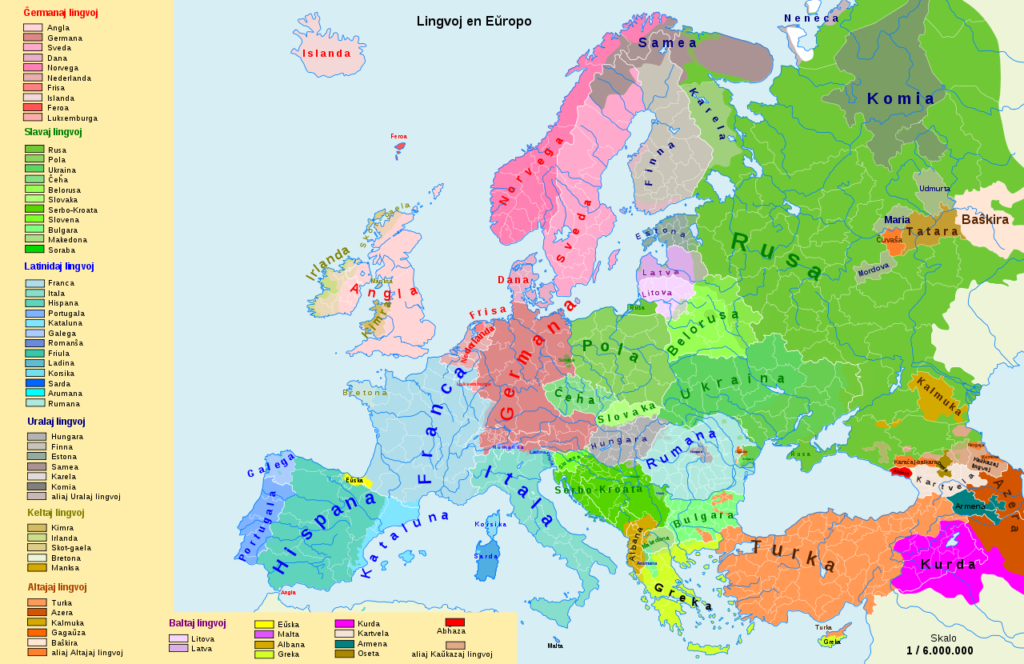
As has already been said, the European Federation (European Union) is an example of federalism through integration; therefore, upon the creation of the new state, the Member States had to relinquish a portion of their competences to the new state entity. But on the other hand, when speaking of European federalism, one must take into account the specifics of this entity. Within the European Union, in a limited space, there is immense multiculturalism. The vast majority of the European Federation’s population (approximately 93%) speaks languages from the Indo-European family. Within this family, the most widely used are the Slavic languages (including Polish and Ukrainian), Germanic languages (especially German and English), and Romance languages (e.g., French, Italian, and Spanish). The remaining groups of Indo-European languages are used by much smaller populations. One such small group is the Baltic languages, which include Lithuanian and Latvian. In addition to the Indo-European languages, within the territory of the European Federation, there is a group of several million people speaking languages from the Uralic family (mainly the Finno-Ugric languages – Hungarian, Estonian, and Finnish), several hundred thousand speaking a language from the Semitic family (Maltese), and about one million speaking the isolated Basque language. The small size of the European Federation’s territory, as well as its cultural, historical, and religious diversity, has given a special character to federalism in the European Union. The basis of the European Federation’s functioning is and will be the development of political methods of agreement among numerous cultural groups. The European Union represents a model of a federation with an immense will to create an independent nation, which is based on mutual respect between minorities. What we call nationalism today refers to an ethnic tradition and the desire to separate a piece of a country from its whole. The inhabitants of the Member States, representing various languages, national, ethnic, and religious groups, have developed a conviction about the necessity of creating a political entity that may seem an artificial construct. To understand European federalism well, one should not forget that the European Union will be formed by forty-two Member States, which are largely autonomous and which proudly call themselves „republics,” „kingdoms,” or „states.” It is the Member States that are the foundation of the European Federation, and not national and linguistic communities. Poland, Iceland, Portugal, Greece, and Albania are examples of European countries with a relatively high degree of national homogeneity. However, it should be remembered that even in these countries, there is some degree of diversity, and the concept of ethnic homogeneity is complex and multifaceted. However, conflicts between cantons are very rare.
Another important fact is that in the European Federation there is no dominant capital city; federal power is based in the country’s capital – Brussels. Brussels is of medium size within the European Federation, and Paris, London, Berlin, Madrid, Barcelona, or Rome are cities that surpass it in terms of population. Furthermore, Brussels is neither the business nor the cultural center of the European Federation. Banks are concentrated in all major cities. Another phenomenon positively influencing cooperation between the Member States is the fact that tourist destinations are located in all parts of the European Union, and large industrial plants (such as the production of cheeses, watches, and automobiles) are located in various parts of the federation. In such a situation, where there are many connections between the Member States: linguistic, economic, and cultural, European politics is characterized by the existence of many coalitions that are constantly changing. In this way, none of these coalitions constitutes a permanent majority.
However, in recent years, many publications have emerged that question the durability of European Integration, even speaking of a possible „breakup” of the European Union. Analyzing various aspects of this process and pointing to potential threats, they can be divided into several categories, depending on their approach and argumentation:
1. Critique of the EU’s Governance Model and Democratic Deficits:
- Publications analyzing crises in the EU: Many works focus on the analysis of specific crises, such as the Eurozone crisis, the migration crisis, Brexit, and the COVID-19 pandemic, and show how these events revealed institutional weaknesses and a lack of solidarity among Member States. For example, analyses of the Greek debt crisis showed tensions between market logic and European solidarity.
- Critique of the democratic deficit: These publications argue that the EU suffers from a lack of democratic legitimacy due to the limited role of the European Parliament and the dominance of the executive branch in the form of the European Council. They raise issues of a lack of transparency and decisional accountability.
- Analyses of the multi-level governance model: Some works question the effectiveness of this model in crisis situations, pointing to difficulties in coordinating actions between different levels of power (EU, national, regional). An example is Krzysztof Tomaszewski’s publication „Critique of the European Union’s Governance Model in the Context of the Integration Process Crisis.”
2. Rise of Eurosceptic and Nationalist Sentiments:
- Analyses of Eurosceptic and populist movements: These publications examine the rise in support for Eurosceptic and populist parties in various EU countries, analyzing their programs, rhetoric, and influence on European policy. They point to the erosion of trust in EU institutions and the rise of nationalist sentiments.
- Public opinion research: These studies measure the level of support for the EU and European integration in various countries, identifying the factors that influence these attitudes. They point to fluctuations in public sentiment and susceptibility to populist narratives.
3. Issues of Sovereignty and National Identity:
- Debates on sovereignty: These publications analyze the tensions between national sovereignty and European integration, arguing that further integration may lead to a loss of control by Member States over key policy areas.
- Discussions on European identity: Some works question the existence of a coherent European identity, pointing to strong attachments to national and regional identities. They point to difficulties in building a sense of transnational community.
4. Geopolitical and Global Challenges:
- Changes in the global order: These publications analyze the impact of changes in the global order, such as the rise of China or transatlantic tensions, on the EU’s position and cohesion.
- Global crises: Analyses of the impact of global crises, such as the financial crisis, the COVID-19 pandemic, and the war in Ukraine, on European integration. They point to the need for the EU to adapt to new challenges.
- EU enlargement issues: Discussions on the consequences of further EU enlargement, including concerns about the dilution of integration and difficulties in decision-making. An example is the article „The Imperative of Enlargement. The European Union between Historical Chance and the Risk of Crisis (Part 2).”
The foundation of the European Federation is the Member States. What is very important in the European political system is the principle of subsidiarity. Assigning to the Member States all rights that do not explicitly belong to the federal authorities:
Article 16
(1) The Member States are sovereign except to the extent that their sovereignty is limited by the Constitution of the European Union.
(2) Except as otherwise provided or permitted by this Constitution, the exercise of state powers and the discharge of state functions is a matter for the Member States.
Article 139
(1) The Member States shall have the right to legislate insofar as this Constitution does not confer legislative power on the Union.
(2) The division of authority between the Union and the Member States shall be governed by the provisions of this Constitution concerning exclusive and concurrent legislative powers.
A Federal Constitution requires that any expansion of the European Federation’s competences necessarily implies a change in the constitutional order, which provides ample opportunity for federalist forces to intervene and protest against centralization. Alliances formed to defend the rights of the Member States often proved strong enough for centralizing tendencies to be defeated. This is how the Treaty establishing a Constitution for Europe of October 29, 2004, failed. However, there were also situations when the Member States themselves transferred to the European Union matters that they could not resolve on their own, but this only happened when they truly had no other choice. In these cases, centralizing forces managed to prevail despite everything. As competences were transferred to the European Federation, the vast freedom that the Member States possessed was significantly limited. However, even though the Union has strengthened its position in the European political system, the Member States have retained a key position, and federalism remains one of the most important aspects for understanding the functioning of this system. It should also not be forgotten that a large part of federal revenue accrues to the Member States. Initially, the finances of the European Union and the Member States were clearly separated. Each was obligated to fulfill its tasks, having at its disposal only its own resources. Even for carrying out tasks on behalf of the Union, the Member States received nothing from it. Today, however, the European Federation is obliged to share a certain portion of its revenue with the Member States.
Article 142
The Union shall have exclusive legislative power with respect to:
[…]
16. customs duties and fiscal monopolies.
Article 143
Concurrent legislative power shall extend to the following matters:
[…]
12. taxes on consumption and capital turnover, with the exception of taxes of local significance, in particular tax on the acquisition of land, tax increment value and tax
fire prevention;
13. the income tax and the property tax,
14. real of taxes with the exception determining the rates of call, if the European Union uses these taxes in full, or in part to cover the expenditure of the Union, or if there are circumstances provided for in Article 141 paragraph 2.
Article 156
(1) The European Union and the Member States shall separately finance the expenditures resulting from the discharge of their respective responsibilities insofar as this Constitution does not otherwise provide.
(2) Where the Member States act on federal commission, the European Union shall finance the resulting expenditures.
(3) European laws providing for money grants to be administered by the Member States may provide that the European Union shall pay for such grants wholly or in part. If any such law provides that the European shall finance one half or more of the expenditure, it shall be executed by the Member States on european authorities.
(4) The European Union and the Member States shall finance the administrative expenditures incurred by their respective authorities and shall be responsible to one another for ensuring proper administration. Details shall be regulated by a European law.
Article 157
(1) The yield of fiscal monopolies and the revenue from the following taxes shall accrue to the European Union:
1. customs duties;
2. taxes on consumption, with the exception of the tax on beer;
3. tax on transport,
4. non-recurring levies on property and equalisation of burdens levies.
(2) Member States and in accordance with the laws of the Member States municipalities accrue proceeds of the following taxes:
1. the beer tax;
2. the taxes on capital transactions, with the exception of the transport tax and sales tax;
3. the property tax;
4. the inheritance tax, tax on motor vehicles;
5. the taxes real;
6. the taxes of local importance.
(3) Revenue from income taxes, corporation taxes and turnover taxes shall accrue respectively 30% of the Union, and 70% of the Member States.
(4) To provide the ability to perform efficiently in Member States with low tax revenues and to compensate for different loads of the Member States in terms of expenditure, the Union may grant subsidies and collect funds for it from certain taxes attributable to the Member States. European law determines which taxes can be used for that purpose, and in what amount and under what conditions will be granted subsidies to the Member States entitled to compensation. Subventions should be provided to Member States directly.
(5) For the purpose of this Article, revenues and expenditures of municipalities (associations of municipalities) shall also be deemed to be revenues and expenditures of the Member States. The legislation of the Member States shall determine whether and to what extent municipalities accrue tax revenues of Member States.
(6) If in individual Member State or municipalities the Union requires special facilities to be established that directly result in an increase of expenditure or in reductions in revenue (special burden) to these Member State or municipalities, the Federation shall grant the necessary compensation if and insofar as the Member State or municipalities cannot reasonably be expected to bear the burden. In granting such compensation, due account shall be taken of indemnities paid by third parties and financial benefits accruing to these Member State or municipalities as a result of the establishment of such facilities.
One of the main principles of federalism is that each Member State within the European Federation possesses its own competences, which it can exercise without any intervention from the federal authorities. The most important factor of the autonomy of the Member States forming the European Federation, in the case of the European Union, is the fact that each of them can establish its own constitution, with one limitation, namely, such a constitution must respect the principles of the Federal Constitution and contribute to maintaining the cohesion of the European Union.
Additionally, four other factors demonstrate the significant autonomy of the Member States.
Firstly, the existence of the Member States is guaranteed: the federal legislator cannot create or abolish any Member State against its will. This is guaranteed in the Federal Constitution:
Article 1
(1) The European Union is a federal democratic republic, which create the sovereign Member States.
(2) All power emanates from the People, who exercise it through elected representatives or directly, under this Constitution.
Article 2
(1) European Union as a federation create sovereign Member States: Ukraine, Sweden, Romania, Italy, Germany, France, Denmark, Bulgaria, Poland, United Kingdom, Spain, Belarus, Serbia, Finland, Switzerland, Malta, Ireland, Moldova, Estonia, Montenegro, Austria, Portugal, Netherlands, Georgia, Norway, Kosovo, Cyprus, Slovenia, Luxembourg, Armenia, Lithuania, Bosnia and Herzegovina, Greece, the Czech Republic, Belgium, Iceland, Albania, Hungary, North Macedonia, Slovakia, Croatia and Latvia.
(2) The territory of the European Union is a single unified whole and consists of the territories of the Member States.
(3) The territory of the Member State may not be altered without the consent of that Member State.
(4) The frontiers of the European Union may not be altered without the consent of all Member States.
(5) Boundaries between the Member States may only be altered on the basis of mutual agreement.
Secondly, the Member States organize their political life in an autonomous manner. Each of them establishes its own authorities, distributes competences among them, and defines the rights and obligations of citizens. Federal law imposes only a few elementary principles on this matter, which practically boil down to the idea of equality and the principle of democracy. Apart from these two principles, the Member States possess complete freedom regarding the organization of their internal political life. As a result, the legal systems of the Member States still differ significantly.
Thirdly, the Member States freely choose their authorities. The European Executive Council does not impose governors/viceroys on the Member States, does not participate in either the election of deputies or the election of members of the government, and does not even have the power to dissolve the parliament of a Member State or to dismiss the government of a Member State.
Fourthly, and finally, the Member States are not subject to political control by the European Federation. There is, of course, oversight of the activities of the Member States; the European Federation possesses a whole system for carrying it out. The constitutions of the Member States are subject to scrutiny.
Article 14
(1) The constitutional order in the Member States must conform to the principles of a democratic state governed by the rule of law, within the meaning of this Constitution. In each Member States and municipality the people shall be represented by a body chosen in general, direct, free, equal and secret elections.
(2) The Union shall guarantee that the constitutional order of the Member States conforms to the Charter of Fundamental Rights and to the provisions of paragraphs 1.
Certain rights of the Member States are subject to oversight by the European Executive Council. The majority of decisions and court rulings are subject to appeal before the Court of Justice of the European Union. However, these checks differ from the control of power in a unitary state in that they are limited only to the control of legality, not of expediency. The European Executive Council may, for example, refuse to accept a given law only when it finds that it violates federal law; it cannot object to it simply for being bad.
Another important issue to address regarding federalism is the bicameralism of the federal parliament, which differs significantly from the bicameralism of parliaments in unitary states. The European Parliament, like all parliaments of federal states, consists of two chambers: the Chamber of Deputies and the Senate. The former represents the nation, and during its election and the distribution of mandates, the population of the Member States is taken into account. In contrast, the composition of the Senate is closely linked to the government of the Member State, and its representation ranges from 2 to 10 senators. Article 80 and Article 81(1) of the Federal Constitution are dedicated to the composition and elections of the Chamber of Deputies:
Article 80
(1) The Chamber of Deputies shall be composed of 645 Deputies.
(2) Elections to the Chamber of Deputies shall be universal, equal, direct and proportional and shall be conducted by secret ballot. If, no later than on the day of vote, he has attained 18 years of age, any citizen of the Union, shall have the right to vote for the representatives to the Chamber of Deputies.
(3) Each Member State constitutes an electoral constituency.
(4) The number of representatives per each Member State is set out in the European supplementary law, in proportion to population. Necessary adjustments are made in the year before the election, so that no Member State had no less than 3 and not more than 96 seats.
Article 81
(1) The Chamber of Deputies shall be chosen each for a 5-year term of office. The term of office of the Chamber of Deputies shall begin on the day on which the Chamber of Deputies assembles for its first sitting and shall continue until the day preceding the assembly of the Chamber of Deputies of the succeeding term of office.
On the other hand, Article 94 is dedicated to the composition and election of the Senate:
Article 94
(1) The Member States shall participate through the Senat in the legislation and administration of the Union.
(2) The Senat shall consist of members of the Member State governments, which appoint and recall them. Other members of those governments may serve as alternates. At the head of delegation of a Member State, the Prime Minister of that Member State. At the end of the legislature of a Member State or on its dissolution, sent members of the government of a Member State now hold office until such time as a new Member State parliament will elect a new government of a Member State.
(3) Each Member State shall have at least two votes; Member states with more than 6 million inhabitants have 3 votes, Member states with more than 12 million inhabitants have 4 votes, Member states with more than 20 million inhabitants have 5 votes, Member states with more than 30 million inhabitants have 6 votes, Member states with more than 42 million inhabitants have 7 votes, Member states with more than 56 million inhabitants have 8 votes, Member states with more than 72 million inhabitants have 9 votes, and Member states with more than 90 million inhabitants have 10 votes.
(4) Each Member State may appoint as many members as it has votes. Members of the Senat have a duty to vote in accordance with the content of the instructions provided by the government of a Member State which appointed them. The votes of each Member State may be cast only as a unit and only by Members of the Senat present or their alternates. In the case of different votes of the members of the Senat from one Member State shall be adopted in the Head of Delegation of the casting vote.
(5) Number of votes allowed for each Member State in the Senat shall be determined by the President of the European Union after each general census.
It should be noted that, as already mentioned, the bicameralism of the European Parliament is perfectly symmetrical, meaning that the legislative procedure can be initiated in either chamber, and in order for a given law to be adopted, the agreement of both chambers is necessary, which further emphasizes the importance of the Member States in the decision-making process at the Federation level.
Finally, it should be mentioned that a federal dialogue exists within the European Union – the European Council. What does this mean? It is a forum that serves for regular political meetings – in principle, twice a year – between a delegation of the European Executive Council and a delegation of the governments of the Member States. These intergovernmental meetings are an opportunity to exchange information and points of view on important topics concerning the Federation-Member State relationship (institutional issues, foreign policy, inter-ministerial projects). The aim of this dialogue is to harmonize the policies of the Federation and the Member States when new projects are undertaken and during their implementation. The composition of the delegations varies depending on the topics discussed.